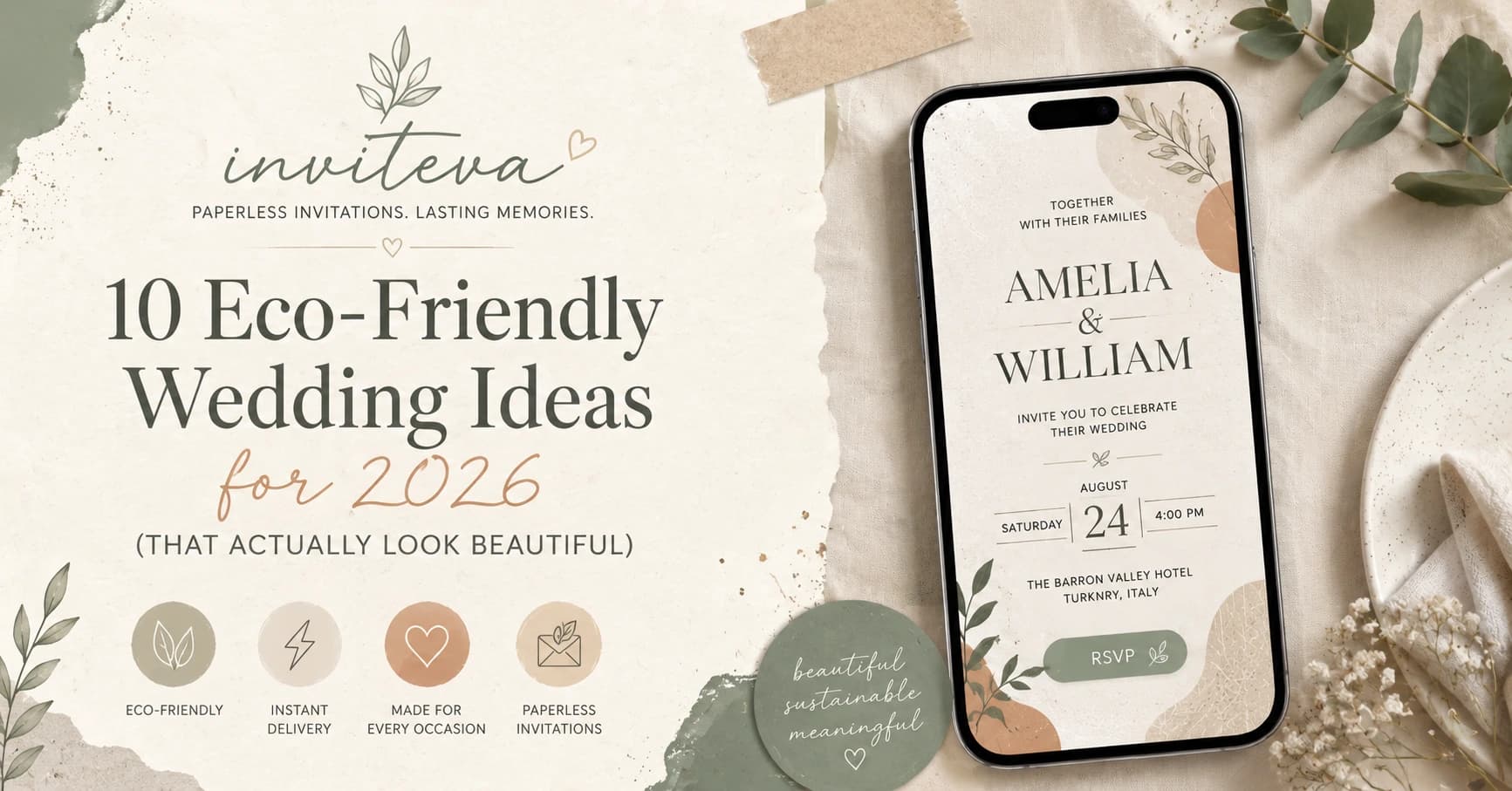
There’s a persistent myth that sustainable weddings mean compromise — that going green means rougher edges, simpler details, or a day that looks like it was planned in a hurry. It’s not true.
The most beautiful weddings of 2026 are also some of the most consciously planned. Seasonal flowers, locally-sourced food, natural materials, and a venue with real character — these choices don’t feel like trade-offs. They feel like taste.
Here are ten ideas you can actually use.
“The most beautiful weddings of 2026 are also some of the most consciously planned.”
Start with a digital invitation
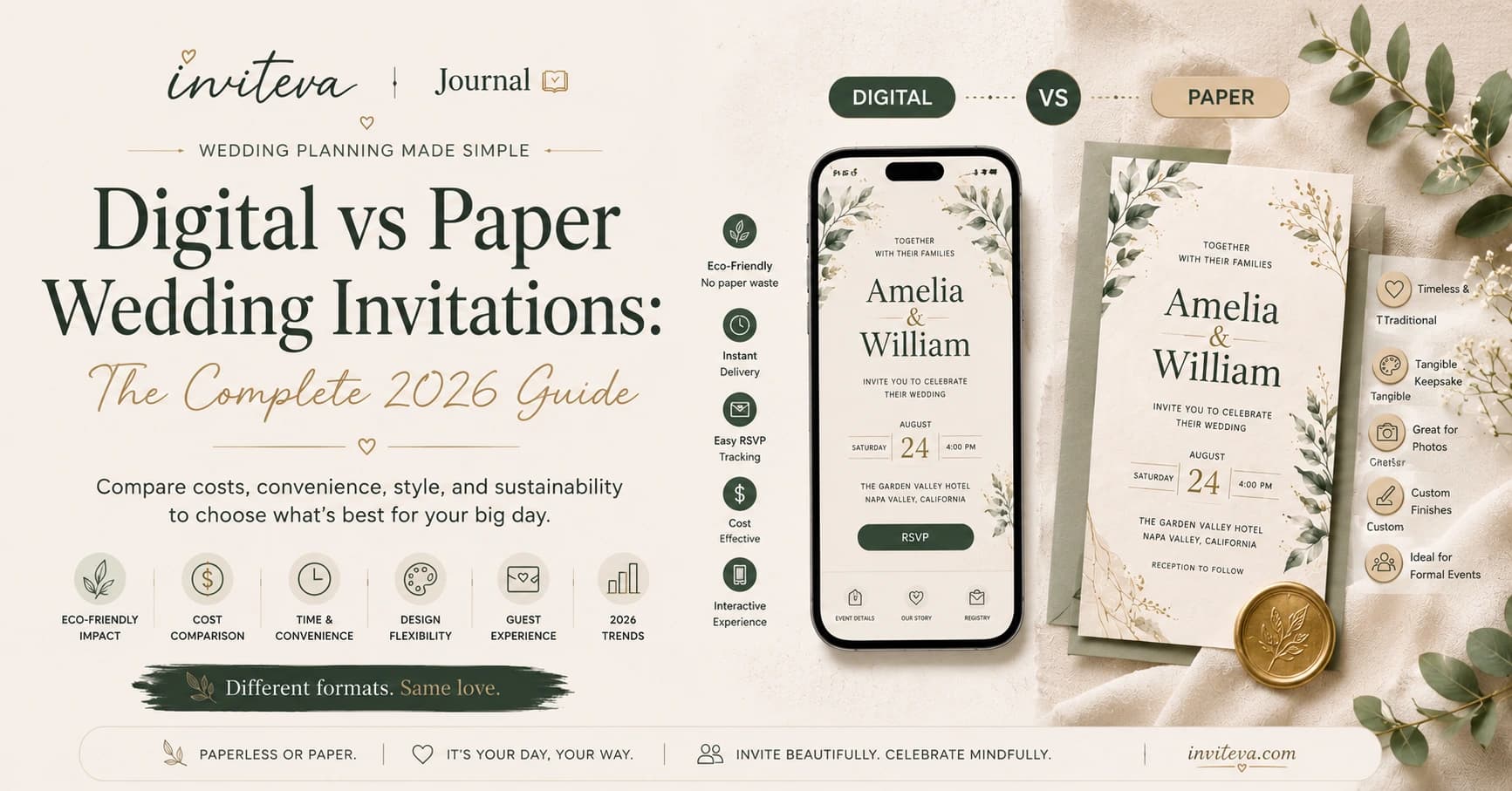
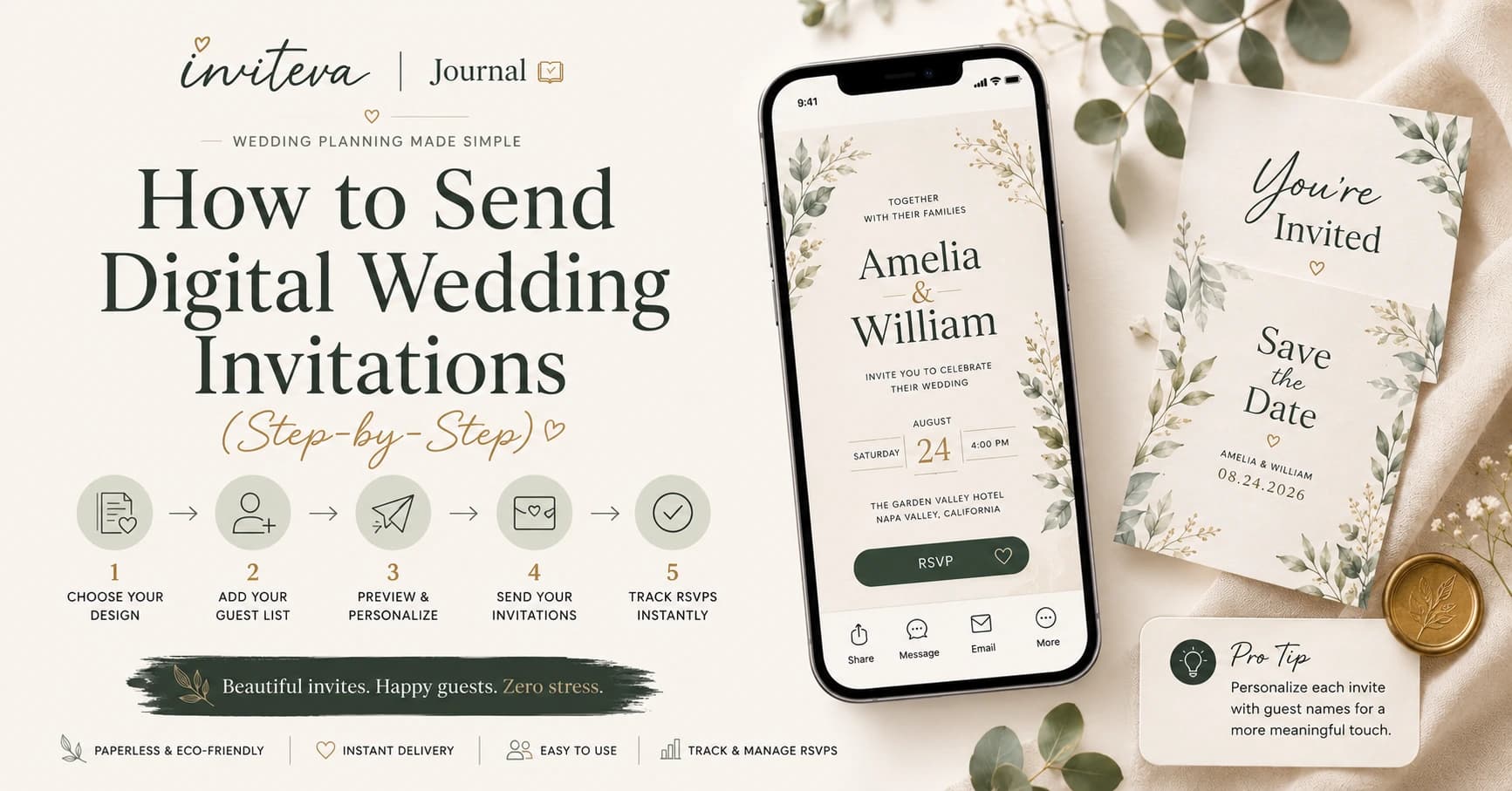
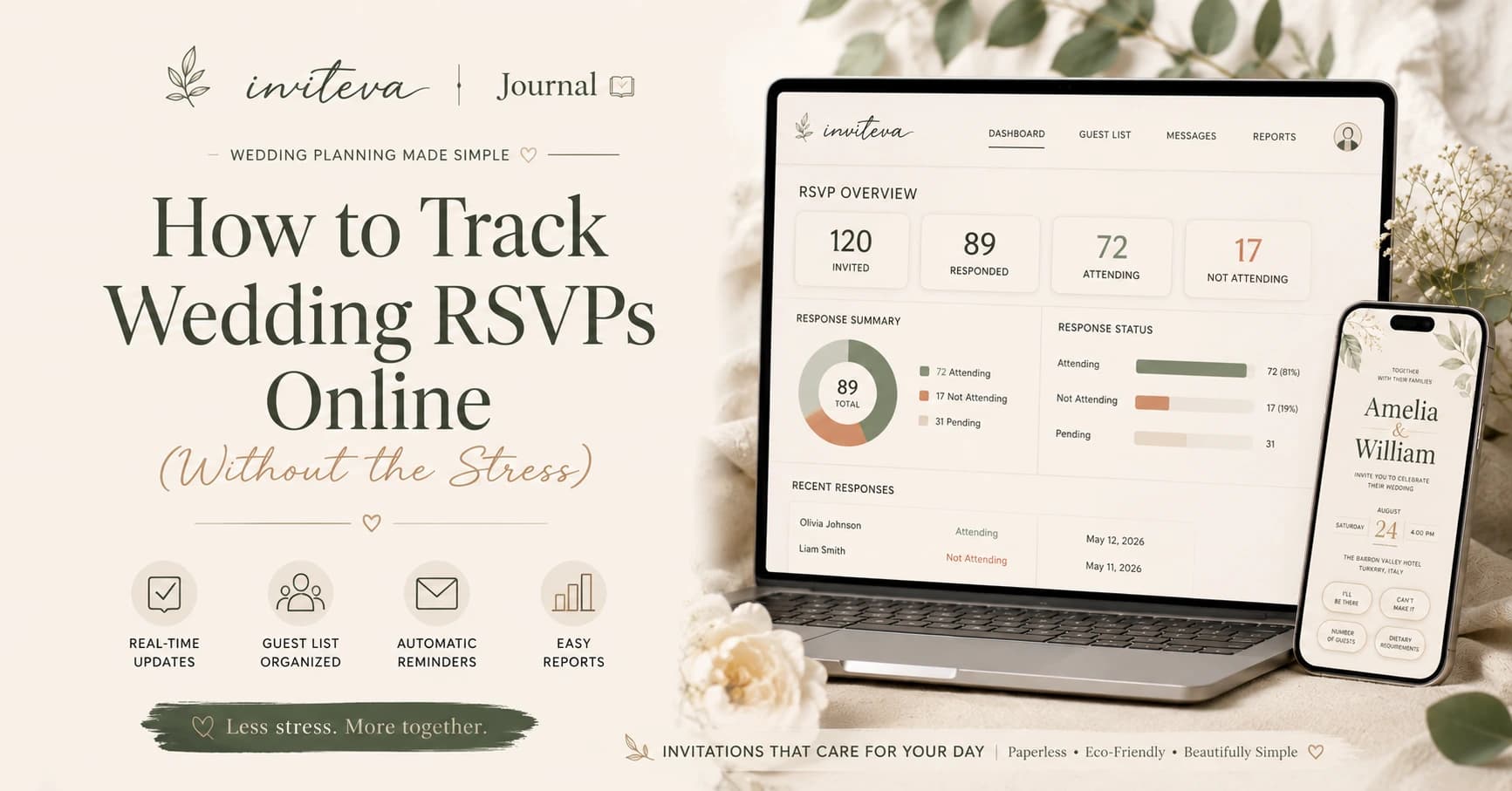
The single biggest switch you can make before your wedding even begins. Paper invitations — printing, envelopes, ink, delivery — generate surprising amounts of waste for something guests keep for a few weeks at most. A digital invitation is just as beautiful, arrives instantly, and produces zero paper waste.
Choose locally-grown, seasonal flowers
Most cut flowers sold in the UK travel thousands of miles by air freight before they reach your florist. Choosing British-grown, seasonal blooms dramatically cuts your carbon footprint — and they're fresher, longer-lasting, and often more beautiful. Spring weddings suit tulips and peonies; summer brings roses and sweet peas; autumn offers dahlias and sunflowers.
Serve a seasonal, locally-sourced menu
Work with your caterer to build a menu around what's in season and what's produced close to your venue. This cuts food miles, supports local farmers, and often tastes significantly better than ingredients flown in from abroad. Even small changes — swapping imported asparagus for British-grown, choosing a local brewery for drinks — add up quickly.
Rent, borrow or buy second-hand
Wedding dresses are worn once and then stored in a box for decades. Consider renting yours, buying pre-loved from sites like STILL WHITE or Vinted, or wearing something that belonged to a family member. The same principle applies to bridesmaid dresses, suits, décor items, table linens, and centrepiece props.
Replace confetti with wildflower seeds
Plastic confetti is banned at most venues and takes years to break down. Dried flower petals are a beautiful alternative — but wildflower seed confetti is better still. Guests throw seeds, and something living grows in its place. You can find it pre-made, or DIY paper cones filled with seed mixes that match your colour palette.
Give favours guests will actually use
Most wedding favours end up in the bin. Instead, give guests something living (a small potted succulent or herb), something edible (local honey, homemade jam, chocolates from an artisan maker), or something experiential (a donation to a charity in their name). These are memorable, minimal waste, and often cheaper than trinkets no one wants.
Choose a sustainable venue
Barns, woodlands, walled gardens, and historic estates with eco credentials are increasingly popular — and often stunning. Look for venues with solar energy, rainwater harvesting, composting facilities, or organic grounds management. Some venues have specific sustainability certifications; others will be transparent about their practices if you ask.
Make it easy for guests to travel green
Transport is typically the largest source of carbon emissions at any wedding. You can't control how everyone gets there, but you can make it easier to travel sustainably: share train and bus routes on your invitation, organise a coach from a central meeting point, or set up a lift-sharing board. If your venue is in a city, point guests towards cycle hire.
Hire or share your décor
Wedding décor hire is a booming market for exactly this reason. Candelabras, lanterns, arches, signage, table runners, cake stands, and more are available to hire through specialist companies, or via local wedding Facebook groups and platforms like Borrowmy. After the wedding, sell anything you did buy — it will find a home quickly.
Offset what you can't avoid
Even the greenest wedding produces some emissions. Carbon offsetting isn't a perfect solution, but it's a meaningful one. Platforms like Gold Standard and Cool Earth let you calculate and offset your event's footprint by funding verified projects — renewable energy, forest protection, clean cooking stoves. Many couples include this as a small line in their overall budget.
How Much Does a Sustainable Wedding Cost?
The honest answer is: often less. Renting instead of buying, choosing seasonal over imported, going digital instead of printed — these choices tend to reduce costs, not increase them. The exception is premium sustainable suppliers (organic caterers, certified eco venues) who may charge a slight premium, but that’s a trade-off many couples consider worthwhile.
Where to Start
Don’t try to overhaul every decision at once. Pick two or three areas that matter most to you — whether that’s flowers, food, or invitations — and do those well. A few thoughtful choices made with real conviction will always feel more authentic than a checklist of half-measures.
And remember: sustainability isn’t about perfection. It’s about doing more good than you would have done otherwise. Even one genuinely green decision makes your day a little better for the world — and often a little more beautiful too.
Start with the invitation
Join the inviteva waitlist for early access to beautiful, fully paperless wedding invitations — with real-time RSVP tracking included.
Join the waitlist — it's free